the opening afternoon
An Unsettled Afternoon
Alone at home while [Carson Drew](entity:character-recall-character-carson-drew-83166b79a5ee) was away on business and [Hannah Gruen](entity:character-recall-character-hannah-gruen-2895d8906eb3) was off duty, [Nancy Drew](entity:character-recall-character-nancy-drew-ce3313c4d1ee) found herself unable to concentrate on a book. She wondered whether her restlessness came from simply wanting another adventure.
A sharp doorbell interrupted her thoughts. The stranger at the door would soon give her a reason to fear that trouble had arrived instead.
the opening afternoon
Gombet’s First Visit
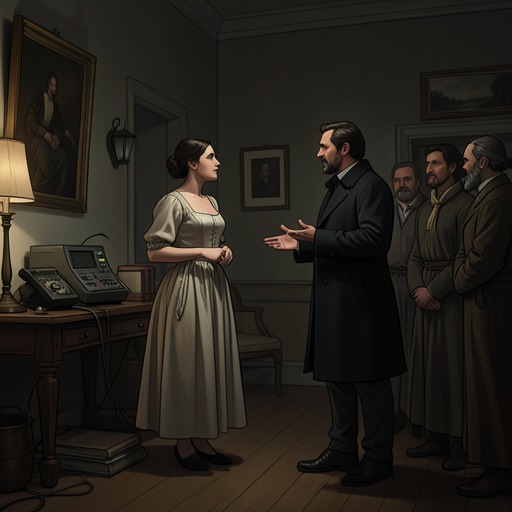
[Nathan Gombet](entity:character-recall-character-nathan-gombet-ad134d794d8e) entered without invitation and demanded to see [Carson Drew](entity:character-recall-character-carson-drew-83166b79a5ee). When Nancy explained that her father was out of town, Gombet accused him of cheating him over land rights connected to the river and demanded either a deed or more money.
Nancy firmly defended her father, whose professional reputation she trusted. Gombet’s grievance introduced the novel’s first threat and established his fixation on money and supposed wrongs.
during Gombet’s first visit
The Search for Papers
Gombet insisted that the papers he wanted must be in the house and moved toward [Carson Drew](entity:character-recall-character-carson-drew-83166b79a5ee)’s study. Nancy tried to stop him, but he wrenched free and rummaged through the desk.
When she threatened to call the police, Gombet backed down and left after warning that he would not give up his claim. Nancy was shaken by how quickly his angry demands had become an intrusion into her home.
later that afternoon
Allie’s Visit
[Allie Horner](entity:character-recall-character-allie-horner-45fa1fbda28c) arrived with a chicken and fresh eggs, lifting Nancy’s spirits with news of the improved fortunes of her family. Their easy conversation briefly displaced the unsettling encounter that had occupied Nancy’s thoughts.
When Nancy told Allie about Gombet’s accusation, Allie recognized him as a miserly former customer from [Cliffwood](entity:location-recall-location-cliffwood-7985092622f9). Her firsthand dislike of him reinforced Nancy’s suspicion that his claims and methods could not be trusted.
during Allie’s visit
Gombet’s Bridge Grievance
Allie explained that Gombet had disputed the railroad’s use of land sold for a bridge over the river. He had claimed that the bridge damaged the remainder of his property and, according to rumor, threatened to blow it up if he did not get his way.
Nancy recognized that the grievance could be more than a private quarrel: Gombet’s anger might endanger others. She resolved to tell [Carson Drew](entity:character-recall-character-carson-drew-83166b79a5ee) and began to see him as a man whose resentments could lead to desperate acts.
late that afternoon
The Bridge Crossing
Nancy rode with Allie toward the countryside, then chose to walk back along the [Muskoka River](entity:location-recall-location-muskoka-river-4970d922c6c7). Near the railroad bridge, she watched a fast train thunder over the structure.
The spectacle made Gombet’s threat feel frighteningly concrete. Nancy imagined the damage he could cause and returned to the idea that someone should stop him before he harmed anyone.
that evening
Carson Explains the Dispute
When [Carson Drew](entity:character-recall-character-carson-drew-83166b79a5ee) returned, Nancy told him about Gombet’s visit and the accusations he had made. Carson explained that he had served on the land commission and that Gombet had been fairly compensated for the railroad right of way.
Gombet had continued demanding more after the bridge was built, but Carson regarded the claims as groundless. Nancy remained uneasy, especially after telling her father about the reported threat to the bridge.
that evening
The Second Confrontation
Nancy glimpsed a face at the window and believed it was Gombet. A moment later, he appeared at the front door, and Carson let him in to settle the matter directly.
Carson challenged Gombet for bothering Nancy and rejected his renewed demand for payment. Their exchange showed that Gombet was prepared to press the same grievance in person, despite having no convincing basis for it.
at the end of the second confrontation
A Desperate Warning
Carson told Gombet that the land matter was closed and ordered him to stop threatening the family. Gombet argued that he had been cheated and insisted he was owed money.
Before leaving, he warned Carson that he would do something desperate if he did not get what he wanted. Nancy feared that the threat might be aimed at her father or the railroad bridge, while Carson promised to be cautious.
several days later
A Visit to Abigail
As the immediate threat faded from daily thought, Nancy visited [Abigail Rowen](entity:character-recall-character-abigail-rowen-e8e17a06b728) at her improved cottage. There she met [Rosemary Turnbull](entity:character-recall-character-rosemary-turnbull-9a690376de0f), an elderly visitor from [Cliffwood](entity:location-recall-location-cliffwood-7985092622f9) who had come to discuss a troubling situation at home.
Rosemary’s account of strange noises and other inexplicable incidents immediately caught Nancy’s interest. The visit turned her longing for adventure toward a new mystery.
during Nancy’s visit to Abigail Rowen
The Mansion’s Disturbances
Rosemary described living with her twin sister, [Floretta Turnbull](entity:character-recall-character-floretta-turnbull-88b79864cdea), in the old family house known as [The Mansion](entity:location-recall-location-the-mansion-2480b38cd6a9). In recent weeks, they had heard unexplained sounds and music, seen shadows, and found flies inside despite keeping the house closed.
The sisters had also begun losing small belongings. Their worry was not merely about a ghost story: Floretta was so distressed that she wanted them to leave their home.
the same evening
A Missing Pin
Nancy drove Rosemary to [The Mansion](entity:location-recall-location-the-mansion-2480b38cd6a9) and was introduced to Floretta, who was distraught over the disappearance of her diamond bar pin. She said she had left it on her dresser while answering the iceman, then returned to find it gone.
The timing was puzzling: Floretta had been away only a few minutes, the windows were screened, and the house was usually kept locked. The loss made the supposed haunting look increasingly like a real intrusion.
during Nancy’s first visit to The Mansion
The Locked Bedroom
Nancy inspected Floretta’s bedroom and found that the dusty window screens appeared untouched. Floretta had not seen anyone enter, and the creaking stairs made an unnoticed trip upstairs seem unlikely.
A closet suggested one possible hiding place, but Nancy found it empty. She could offer no explanation for the stolen pin, yet the apparent impossibility of entry made her more determined to investigate.
the end of her first visit to The Mansion
Nancy Takes the Case
Rosemary and Floretta asked Nancy to investigate, explaining that the local police had previously dismissed their reports as a joke. Nancy agreed to help, though she made no claim that she could solve the mystery.
She proposed staying at [The Mansion](entity:location-recall-location-the-mansion-2480b38cd6a9) so she could observe the house herself. Before leaving, she promised to ask [Carson Drew](entity:character-recall-character-carson-drew-83166b79a5ee) for permission and to keep the purpose of her visit quiet.
that evening
Permission to Stay
At home, Nancy told [Carson Drew](entity:character-recall-character-carson-drew-83166b79a5ee) about the Turnbull sisters and the strange events in their house. He was concerned that the visit might be dangerous, but Nancy argued that she wanted to be self-reliant and help the sisters.
Carson agreed that she could stay with them while he traveled to Chicago. His consent allowed Nancy to take up the case, while his concern made clear that he understood the risks more seriously than she did.
before Carson Drew leaves for Chicago
The Revolver
[Carson Drew](entity:character-recall-character-carson-drew-83166b79a5ee) gave Nancy his revolver and urged her to take it to [The Mansion](entity:location-recall-location-the-mansion-2480b38cd6a9). Nancy doubted that she would need it, but accepted the weapon because her father wanted her prepared.
The exchange underscored the possibility that the disturbances were not harmless. Nancy’s investigation would begin with both her curiosity and a warning that the unseen intruder might pose a real danger.
the night before Nancy’s departure for The Mansion
The Anonymous Warning
While packing at home, Nancy felt watched and heard a step outside. She opened the door to find no one there, but discovered an envelope addressed to her on the porch.
Inside was a brief warning telling her to stay away from [The Mansion](entity:location-recall-location-the-mansion-2480b38cd6a9). Nancy was startled that someone knew of her plans, which she had carefully kept from nearly everyone, but the message strengthened rather than weakened her resolve.
the following morning
The Journey to Cliffwood
Nancy left [River Heights](entity:location-recall-location-river-heights-83eab8607615) for [Cliffwood](entity:location-recall-location-cliffwood-7985092622f9) and drove to [The Mansion](entity:location-recall-location-the-mansion-2480b38cd6a9). Rosemary welcomed her with evident relief, saying that the sisters had nearly decided to leave if Nancy did not come.
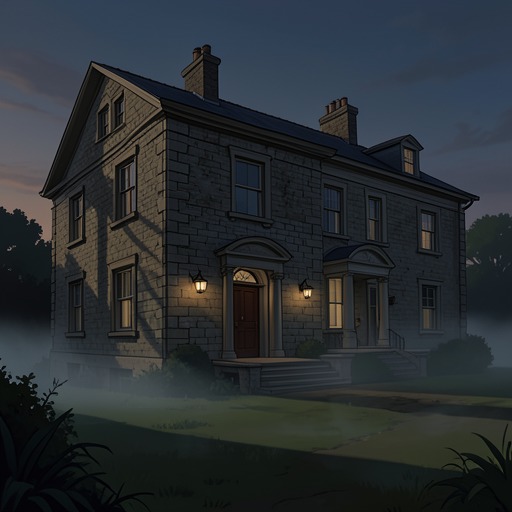
The house’s isolation and dark, castle-like appearance heightened the atmosphere of unease. Rosemary reported that the previous night’s muffled music had seemed to shift from one part of the house to another.
shortly after Nancy arrives
Floretta’s Fear
Rosemary showed Nancy to a room beside her own, where Nancy could call for help if anything happened. The sisters locked their bedroom doors, and Nancy agreed to do the same.
Floretta, pale and exhausted after another night of disturbances, doubted that anyone could help them. Nancy reassured her and said she would search for secret panels or trapdoors, then asked whether either sister had told anyone she was coming.
the first day of Nancy’s stay
A Search for Secret Openings
With the sisters’ permission, Nancy began a room-by-room search of [The Mansion](entity:location-recall-location-the-mansion-2480b38cd6a9). She learned that the old house had many rooms, including a wing that had been closed for years, and wondered whether earlier renovations had concealed a passage.
The attic held discarded furniture and walls that sounded hollow in places, but she found no spring or panel. Her first search produced no answer, even as the possibility of hidden spaces became central to her thinking.
the first afternoon of Nancy’s stay
The Basement Search
Nancy continued her investigation in the basement, whose cemented floors and walls seemed unlikely to conceal a trapdoor. She also checked the storerooms to make sure no intruder was hiding there.
The search failed to uncover a passage or any other clue. As evening approached, the house’s shadows and silence made the sisters’ unease understandable, but Nancy still believed an ordinary explanation must exist.
the first evening at The Mansion
The Built-In Sofa
After dinner, the sisters and Nancy sat in the drawing room. Nancy remarked on the unusual sofa, and Floretta explained that it was built into the room as an old family feature.
The detail seemed merely eccentric at the time. Later, Nancy would realize that the built-in furniture concealed important openings, making this casual conversation an unnoticed clue.
the first night of Nancy’s stay
The First Quiet Night
Nancy locked her bedroom door, checked the closet and space beneath the bed, and placed [Carson Drew](entity:character-recall-character-carson-drew-83166b79a5ee)’s revolver and her flashlight within reach. Despite the sisters’ fears, she slept through the night without hearing anything.
The uneventful night offered little evidence, but it gave Nancy a brief respite before the mystery intensified. She continued her search the next morning, still without finding a hidden entrance.
the next two days
A Fruitless House Search
Nancy examined the downstairs walls and bedrooms, tapping with a small hammer and looking behind heavy pictures. She found no panel, although some walls had a hollow sound.
As the search dragged on without results, she began to wonder whether the sisters had misread some of the events. Yet the stolen objects and unexplained disturbances remained difficult to dismiss as imagination.
after several days at The Mansion
The Cry in the Night
Awake in the middle of the night, Nancy heard a dull thud followed by a piercing scream from somewhere below her room. She dressed quickly, took her flashlight and revolver, and found that she had locked herself in until she remembered the key.
Floretta and Rosemary emerged frightened from their rooms. Nancy persuaded them to go downstairs with her and investigate, refusing to let their terror keep them from discovering what had happened.
immediately after the nighttime cry
The Missing Silver Urn
Nancy and the sisters searched the first floor, where they found the locked silver safe intact. In the library, however, a chair had been pushed against the bookcase and Rosemary discovered that her family’s silver urn was missing.
The chair suggested that a person had reached for the urn, weakening the idea of a supernatural theft. But the doors and windows were supposedly secured, leaving the central question unresolved: how had the thief entered and escaped?
the remainder of that night
The Night Vigil
Too frightened to return to bed, Rosemary and Floretta stayed downstairs with Nancy. They wrapped themselves in blankets and waited for dawn, with Floretta keeping watch over the dark corners of the room.
Morning light made the house feel less threatening, but the theft had left the sisters exhausted. Nancy understood that solving the mystery mattered not only for their property but also for their ability to remain in their home.
the morning after the urn disappears
The Library Search
Nancy searched the library carefully, examining its walls, moving the bookcase, and looking for fingerprints. Nothing revealed a concealed door or identified the thief, and the silver urn was nowhere in the house.
The failure deepened her frustration. Rosemary and Floretta began to talk seriously about leaving, while Nancy privately resolved not to give up before [Carson Drew](entity:character-recall-character-carson-drew-83166b79a5ee) returned.
the days after the theft
Carson’s Silence
The next two days passed without another disturbance, but Nancy grew increasingly anxious about [Carson Drew](entity:character-recall-character-carson-drew-83166b79a5ee). He had promised to send a telegram with the time of his return to [Cliffwood](entity:location-recall-location-cliffwood-7985092622f9), and none had arrived.
Nancy considered whether business had delayed him or whether he had gone straight home. Neither explanation satisfied her, and worry about her father began to compete with the mystery for her attention.
about a week after Carson Drew left
The Call Home
Nancy drove into [Cliffwood](entity:location-recall-location-cliffwood-7985092622f9) to telephone home, hoping to learn whether Carson had returned. [Hannah Gruen](entity:character-recall-character-hannah-gruen-2895d8906eb3) told her that he had not come home and that she had heard nothing from him since he left.
Nancy then sent a telegram to the Chicago law firm, asking whether Carson had departed. She returned to [The Mansion](entity:location-recall-location-the-mansion-2480b38cd6a9) with no answer and an increasingly strong sense that something was wrong.
two days before Nancy receives the telegram reply
Carson’s Abduction
[Carson Drew](entity:character-recall-character-carson-drew-83166b79a5ee) completed his Chicago business early and boarded a night train toward [Cliffwood](entity:location-recall-location-cliffwood-7985092622f9). En route, he received a telegram that appeared to be from Nancy, saying she would meet him at the station; he did not know that Gombet had intercepted or exploited the message.
At the station, Gombet told Carson that Nancy had been badly injured and needed him. Alarmed, Carson followed him to his house, where Gombet led him into a dark room and locked him inside. The supposed rescue had been a trap.
the morning after Nancy’s telephone call
The Telegram Reply
A messenger brought Nancy a reply from the Chicago firm: [Carson Drew](entity:character-recall-character-carson-drew-83166b79a5ee) had left two days earlier. The message confirmed that he should have reached [Cliffwood](entity:location-recall-location-cliffwood-7985092622f9), but he had not arrived or contacted her.
Nancy was still trying to make sense of the news when Floretta cried out from upstairs. The sudden interruption turned her fears about Carson into one strand of a widening crisis.
the same morning
Dresses and Canaries
Nancy rushed upstairs to find Floretta distressed because three of her best black silk dresses had disappeared. Above the bed, two live canaries perched on a picture frame, an inexplicable sight in a carefully screened house.
The birds and thefts sharpened Nancy’s belief that a person was gaining access to the rooms by some hidden route. She examined the room but found no opening, then asked whether anyone might have a reason to drive the sisters from their home.
after the dresses disappear
A Real Estate Motive
Rosemary explained that real estate agents had made offers for [The Mansion](entity:location-recall-location-the-mansion-2480b38cd6a9), which the city might want as a historical museum. The sisters had refused to sell below their price, but the accumulating disturbances were making the house difficult to endure.
Among the would-be buyers was [Nathan Gombet](entity:character-recall-character-nathan-gombet-ad134d794d8e), who claimed the sisters had given him an option to purchase the property for far less than it was worth. Nancy saw a possible motive: frightening them could make them accept a ruinous offer.
during Nancy’s questioning
Gombet’s Threats to the Sisters
The sisters said they had never granted Gombet an option and had not trusted him enough to do business with him. He had threatened trouble after they rejected his claimed arrangement, but the dispute had then gone quiet.
Nancy connected that history to the recent thefts and frightening incidents. She could not yet prove Gombet’s involvement, but his desire to acquire the house gave her a promising line of investigation.
later that day
The Two Stone Houses
Nancy asked where Gombet lived and learned that his old stone house stood directly behind [The Mansion](entity:location-recall-location-the-mansion-2480b38cd6a9). The sisters described how the two similar houses had been built by brothers before the [American Civil War](entity:time-recall-time-american-civil-war-b227cbf76ab7), then explained how the second property eventually passed into Gombet’s hands.
They also said Gombet kept many birds, including canaries, and employed a servant. Nancy immediately thought of the birds found in Floretta’s room. The possibility that the two houses were linked gave her a practical reason to investigate the neighboring building.
that afternoon and evening
A Plan for the Night
Nancy decided that a direct visit to Gombet might alert him or place her in danger. Instead, she watched his house and waited for a chance to enter while he was away.
Rain began as evening fell, and Nancy took it as cover for her plan. She dressed for the weather, checked her flashlight and revolver, and waited until Rosemary and Floretta had gone upstairs and the house was quiet.
late that rainy night
Gombet Leaves the House
Nancy slipped out through a kitchen window after finding that the sisters had taken away the keys to the doors. In the rain, she approached Gombet’s house and saw a light in the kitchen, where his servant was working.
Gombet came outside and stood looking toward [The Mansion](entity:location-recall-location-the-mansion-2480b38cd6a9) before walking away. Nancy decided not to follow him: with him gone, she had a rare opportunity to enter his house and search for evidence.
minutes after Gombet leaves
The Cellar Break-In
Nancy searched the outside of Gombet’s house and found an unlocked cellar window. It grated loudly as she climbed through, and the servant came to investigate the noise with a flashlight.
Nancy escaped detection by feeling her way into a storeroom and waiting until the servant went back inside. She had entered the house, but the servant’s presence made every next move dangerous.
later that night
The Kitchen Passage
After searching the basement walls without finding an obvious tunnel, Nancy waited near the kitchen stairs for the servant to leave. When the woman carried laundry away, Nancy slipped upstairs and hid in a closet as she heard her returning.
She then darted through the house and found a narrow winding staircase. Moving cautiously toward the upper floor, she heard a noise but could not tell that [Carson Drew](entity:character-recall-character-carson-drew-83166b79a5ee) was imprisoned nearby.
later that night
The Bird Room
Nancy entered a room crowded with stuffed birds and cages of live canaries. The familiar birds made her suspect that Gombet had supplied the canaries that had appeared in Floretta’s bedroom, but she had not yet found how they crossed between the houses.
A parrot woke and squawked loudly, alerting the servant. Nancy ducked into a closet as the woman entered the room and covered the parrot’s cage to quiet it.
immediately after the servant leaves the bird room
The Locked Closet
Once the servant had gone, Nancy tried to leave the bird room and discovered that its door was locked. Trapped inside, she realized that her investigation had put her in the very danger she had hoped to avoid.
Searching the closet for a way out, she found a small knob behind her. Twisting it produced a click and revealed a long crack in the wall, giving her the first direct sign of the secret mechanism she had been seeking.
late that night
The Hidden Staircase
Nancy pushed the knob with all her strength, and a section of the closet wall dropped open to reveal steep stone steps. She toppled forward and fell down the staircase, striking her head and losing consciousness.
The fall was painful and frightening, but it had opened the way into the concealed structure. Nancy had found the secret route connecting the old house to the mystery at [The Mansion](entity:location-recall-location-the-mansion-2480b38cd6a9).
minutes after the fall
Awakening Underground
Nancy regained consciousness at the bottom of the stone steps, bruised but able to move. She recovered her revolver and flashlight, then tried to reopen the hidden entrance, but could not find its spring from below.
Rather than remain in the underground chamber, she chose to explore the passage. The route might reveal where Gombet had been entering [The Mansion](entity:location-recall-location-the-mansion-2480b38cd6a9) and how he had carried out the thefts.
during Nancy’s underground journey
The Passage’s Fork
Nancy followed a narrow, damp tunnel, stumbling over uneven ground and worrying that the old structure might collapse. A rat startled her, and at a fork she had to choose between two branching routes without knowing which was right.
She pressed on, aware that her flashlight battery was weakening and that getting lost could leave her in darkness. Her persistence carried her to a new flight of steps and the prospect of an exit.
after midnight
The Attic Exit
At the top of the passage’s stone stairs, Nancy found a hidden spring and opened a panel. Beyond it lay narrow, rotten wooden stairs, which she climbed carefully as her flashlight began to fail.
When the light went out, Nancy pulled a large metal ring and opened a trapdoor. She emerged in the attic of [The Mansion](entity:location-recall-location-the-mansion-2480b38cd6a9), recognizing an old highboy she had examined during her earlier search.
after Nancy returns to her room
The Mystery Explained
Safe in her room, Nancy pieced together the evidence. Gombet had been using the hidden passage to enter [The Mansion](entity:location-recall-location-the-mansion-2480b38cd6a9), frighten the sisters, listen to their conversations, and steal their belongings; the strange sounds and appearances of the canaries also had ordinary explanations.
The family houses had once been linked by a passage built in earlier times and later forgotten. Nancy now had more than a theory: she had personally traversed the route connecting Gombet’s house with The Mansion.
the following morning
Gombet’s New Offer
Nancy woke late and learned that Gombet had visited the sisters that morning with another offer for [The Mansion](entity:location-recall-location-the-mansion-2480b38cd6a9). Exhausted and frightened by the disturbances, Rosemary and Floretta had accepted his terms in principle and planned to sign if he returned.
Nancy told them she had solved the mystery and urged them not to surrender their home. Her discovery came just in time to challenge the sale before the sisters made it final.
that morning
The Attic Entrance Revealed
Nancy took the sisters to the attic and showed them the open trapdoor. They were astonished that a staircase could have been concealed in their house for so long without their noticing it.
She explained that the passage connected their home to Gombet’s. Her bruised head and account of the previous night persuaded the sisters that the hidden route was real, though they still wanted to understand how the thief had reached rooms below the attic.
during the sisters’ tour of the passage
The Bedroom Opening
Nancy led Rosemary and Floretta down the hidden staircase to another landing and found a metal ring that opened a panel into Floretta’s bedroom closet. The sisters understood at once how Gombet could have reached the room and taken the dresses and diamond pin.
They also realized that a person hidden in the passage could overhear them. Floretta remembered that they had read Nancy’s letter aloud in that very room, explaining how Gombet could have learned of Nancy’s planned visit.
later that morning
The Sofa Passage
The group continued to another level, where Nancy found a passage exit through the built-in sofa in the library. She then searched the drawing-room sofa and discovered a second opening there.
The exits explained how Gombet could steal from the first floor without passing the sisters’ bedrooms. In particular, the library opening showed how he could take the silver urn and escape through the concealed route.
the end of the passage investigation
The Decision to Call Police
With the hidden entrances exposed, Nancy insisted that Gombet had to be brought to justice. She had the sisters’ account and her discovery of the passage, but she wanted to be certain of the facts before reporting him.
Nancy, Rosemary, and Floretta hurried to Nancy’s roadster. They left [The Mansion](entity:location-recall-location-the-mansion-2480b38cd6a9) to notify the authorities before Gombet returned or had time to conceal what he had stolen.
minutes later
The Sheriff’s Hesitation
At the sheriff’s office, Nancy described the strange events and the hidden passage, with Rosemary and Floretta confirming her account. The sheriff hesitated, saying he could not arrest Gombet without evidence connecting him to a crime.
Nancy argued that the sisters’ story and the passage warranted action. When the sheriff learned that Nancy was [Carson Drew](entity:character-recall-character-carson-drew-83166b79a5ee)’s daughter, he became more willing to trust her judgment, though his change of attitude irritated her.
shortly after the sheriff agrees to act
The Raid on Gombet’s House
Nancy led the sheriff and his deputies to Gombet’s house. The sheriff’s car rushed up the drive, and the officers surrounded the building before attempting to enter through the back door.
There was no answer, and the sheriff began to conclude that no one was home. Nancy feared that the noise had given Gombet time to escape through the secret passage and warned that the house might still be occupied.
during the police raid
The Armed Servant
The sheriff and his men tried to approach the kitchen from the cellar, but the servant opened the inner door with a sawed-off shotgun aimed at them. She threatened to shoot and then locked herself inside.
The officers withdrew rather than risk a gunfight. Nancy understood that the front of the house was compromised and proposed using the passage she had discovered to enter from another direction.
immediately after the servant confronts police
Nancy Leads the Officers
Nancy asked the sheriff and one deputy to follow her through the hidden route, while the remaining officers stayed outside to keep the house under watch. She drove them to [The Mansion](entity:location-recall-location-the-mansion-2480b38cd6a9) and showed them the opening beneath the library sofa.
The sheriff and deputy followed Nancy into the passage, surprised by the concealed staircase and tunnel. Nancy guided them through the dark, warned them about dangerous steps, and led them toward the bird room inside Gombet’s house.
during the officers’ entry
The Servant’s Arrest
Nancy led the sheriff and deputy through the bird room and down toward the kitchen. The servant still guarded the basement door with her shotgun, unaware that the officers had entered from above.
The sheriff surprised her and ordered her to surrender. She dropped the weapon and was handcuffed; when Nancy questioned her, she disclosed that Gombet was upstairs with a prisoner.
moments after the servant’s disclosure
Carson’s Voice
Nancy realized that the prisoner might be her missing father. She urged the sheriff to hurry before Gombet could escape through the secret passage, and the officers moved up the stairs.
From the landing, they heard Gombet threatening a man named [Carson Drew](entity:character-recall-character-carson-drew-83166b79a5ee) and demanding that he sign a paper. Nancy recognized the voice and pointed the officers toward the room where her father was held.
moments later
The Rescue
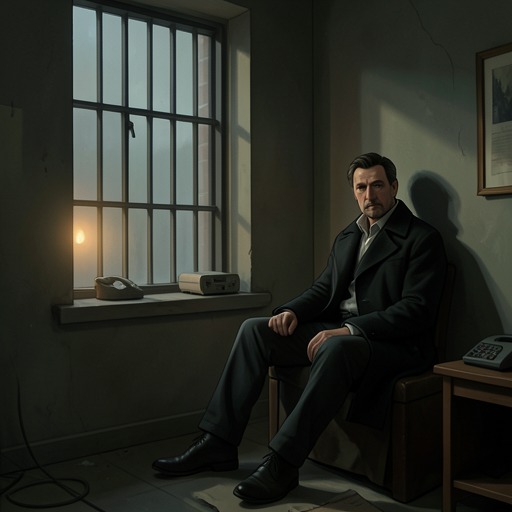
Nancy rushed into the room and found [Carson Drew](entity:character-recall-character-carson-drew-83166b79a5ee) bound to a chair, pale and exhausted, while Gombet stood over him with a threatening demand. The sheriff and deputies closed in before Gombet could act.
Gombet tried to flee but was seized and handcuffed. Nancy and a deputy cut Carson free, bringing the long search for her missing father to an end and stopping the extortion attempt.
immediately after the rescue
Carson’s Account
Carson drank water and explained that Gombet had deceived him at the station by claiming Nancy was injured. Once Carson was inside the house, Gombet had imprisoned him and tried to force him to pay a large sum and promise not to prosecute.
The threat had become real: Carson had been held for days and deprived of food and water. His account confirmed the danger Nancy had suspected in Gombet’s earlier visit to [River Heights](entity:location-recall-location-river-heights-83eab8607615).
after Carson is freed
The Stolen Valuables Found
Nancy asked Gombet where he had hidden the Turnbull sisters’ belongings. He first denied knowing what she meant, but eventually admitted that the objects were in his bedroom across the hall.
Rosemary and Floretta found the silver urn and dresses there, while Nancy recovered the diamond pin, silver spoon, and pocketbook from a drawer. The stolen property gave the sheriff concrete evidence to support the sisters’ accusations.
during the search of Gombet’s house
Gombet’s Confession
Nancy asked Gombet when he had discovered the passage. He admitted finding its hidden spring by accident two months earlier and said there was only one opening into his house, in the room where he kept his birds.
He also admitted sending Nancy the anonymous warning and explained that he had learned of her visit by listening from the passage. His admissions linked the threats, the hauntings, and the thefts to the same scheme.
the end of the confrontation
The Arrests
With Carson’s testimony, the stolen objects, and Gombet’s admissions, the sheriff had clear grounds to take action. He ordered Gombet to be jailed and treated the armed servant as an accomplice.
The officers removed both prisoners from the house. The sisters had their belongings back, and the concealed route that had made their home seem haunted now stood exposed as part of Gombet’s plan.
that evening and the following morning
Rest at The Mansion
[Carson Drew](entity:character-recall-character-carson-drew-83166b79a5ee) was too weak to travel immediately, so Rosemary and Floretta invited him to stay at [The Mansion](entity:location-recall-location-the-mansion-2480b38cd6a9). Nancy helped him settle in and returned to bring the sisters back from the roadster.
Food and rest restored his strength, and by breakfast he felt ready to return to [River Heights](entity:location-recall-location-river-heights-83eab8607615). The once-threatening house had become a place of hospitality rather than fear.
the morning after Gombet’s arrest
The Silver Urn Gift
The sisters told Nancy that the arrest and scandal were already in the morning papers. They thanked her for saving their home and insisted on giving her the silver urn as a lasting remembrance.
Nancy resisted because she knew how much the heirloom meant to them, but finally accepted it when they made clear that they wanted her to have it. It became a second trophy of her detective work, alongside the clock she had earned in an earlier case.
on the drive back to River Heights
A New Detective Calling
As Nancy and [Carson Drew](entity:character-recall-character-carson-drew-83166b79a5ee) left [Cliffwood](entity:location-recall-location-cliffwood-7985092622f9), he praised her detective work and admitted that he was proud of her. Nancy confessed that the underground passage had been so frightening that she had once vowed never to investigate another mystery.
That resolve vanished almost as soon as the danger had passed. Carson joked that he would turn his mystery cases over to her, and Nancy looked forward to whatever adventure might come next.